Tampilkan postingan dengan label Cooperation. Tampilkan semua postingan

Rabu, 10 Oktober 2012

Close Coordination with Utilities is Required

From ODOT-  The need for close coordination with the local utilities is not often noticed or discussed on major construction projects, yet it is important to prevent impacts to service to local residents.  On the Willamette River Bridge project, water, sewer, natural gas, electrical and major fiber optics cables are all found in the construction zone.  Crews need to relocate many lines and carefully mark and avoid others as the work proceeds.


The pictures above show the future path of the new multi-use viaduct path on the north side of Franklin Boulevard before and after crews removed utility poles in preparation for construction.


Removal of the guardrails will provide an open area for large equipment to drill shafts and begin path construction.


As work begins you can clearly see why the utility poles and guardrail were removed.


A great deal of planning is required before any poles, lines or pipes are moved.  Our contractors meet with the appropriate service providers to outline the impacts, options and timing for any changes.  Close coordination ensures that the utility can schedule its work to occur before our construction activities begin.  ODOT appreciates this close cooperation as we work together to complete this project.

Sabtu, 30 Juli 2011

What's in a name?

From ODOT- Local citizens have been working to get support for naming the new Interstate 5, Willamette River Bridge.


The name Whilamut Passage (pronounced "WHEEL-a-moot") is the theme of the project and guides the design enhancements surrounding the bridge. The theme recognizes the unique setting of the bridge in the Whilamut Natural Area, a place of historic and environmental significance. The setting is also a transportation hub of bicycle, pedestrian, rail, waterway, and highway traffic. To the Kalapuya, Whilamut means, "Where the river ripples and runs fast."


Local citizens have already accomplished many of the steps required for naming the bridge. They've received support from Lane County, the cities of Springfield and Eugene, and the Metropolitan Policy Committee. The Oregon Geographic Names Board approved of the name on June 25.


Because the name honors the Kalapuya, the Confederated Tribes of Grand Ronde must also support it. Once this step is complete, the proposal will go to ODOT Region 2 for final approval. The Willamette River Bridge Community Advisory Group has also endorsed the Whilamut Passage name, and ODOT greatly appreciates the time and energy these volunteers are putting into a bridge that means so much to the community.

Rabu, 27 April 2011

South Bank of River to Include Interpretive Displays

From ODOT- We work closely with our contractors to minimize the impact of construction on local historical features and to leave behind not only wonderful new bridges, but historical information about the area in which the bridges are located. The displays will be installed in late 2013 or early 2014.

When the new bridges are completed, visitors to the south bank will see unique interpretive displays about Native American culture and the old Eugene Millrace.

The first interpretative display reminds us that the Willamette Valley and surrounding foothills have a rich Native Anerican heritage that has been mostly forgotten until recently.

To provide more opportunities to understand the contribution of Native Americans, ODOT, in partnership with the Confederated Tribes of the Grand Ronde, will install the display on the river's south bank with information about the history and contributions of the first people to live and prosper in the valley.

The second interpretive display comes from a federal requirement to protect and enhance Eugene's historic Millrace ruins as part of the bridge replacement project.

At one time, the Eugene Millrace diverted water from the river at an intake east of what is now the Willamette River Bridge to generate power to run many Eugene industries. While building the new bridge, we have preserved and exposed more of the original millrace. In addition, we worked with a historian to document the history of the millrace for future generations. Some of that history and information will be part of a permanent display for the public to enjoy when visiting the south bank.

Jumat, 22 April 2011

Floating Past the Bridge Project

From ODOT- I am out on the Willamette River Bridge construction project a great deal, especially on the work bridge. Every time I cross the work bridge, I can’t help but look up and down the river to see if boaters are floating by. Especially with warmer weather, it is not unusual to see people fishing or boating. Later in the spring and summer, others will just float the river on their inner tube to cool off on the hot days.

If you boat or float near the Willamette River Bridge, please remember that you are in a construction zone and passing through requires more attention to be safe.

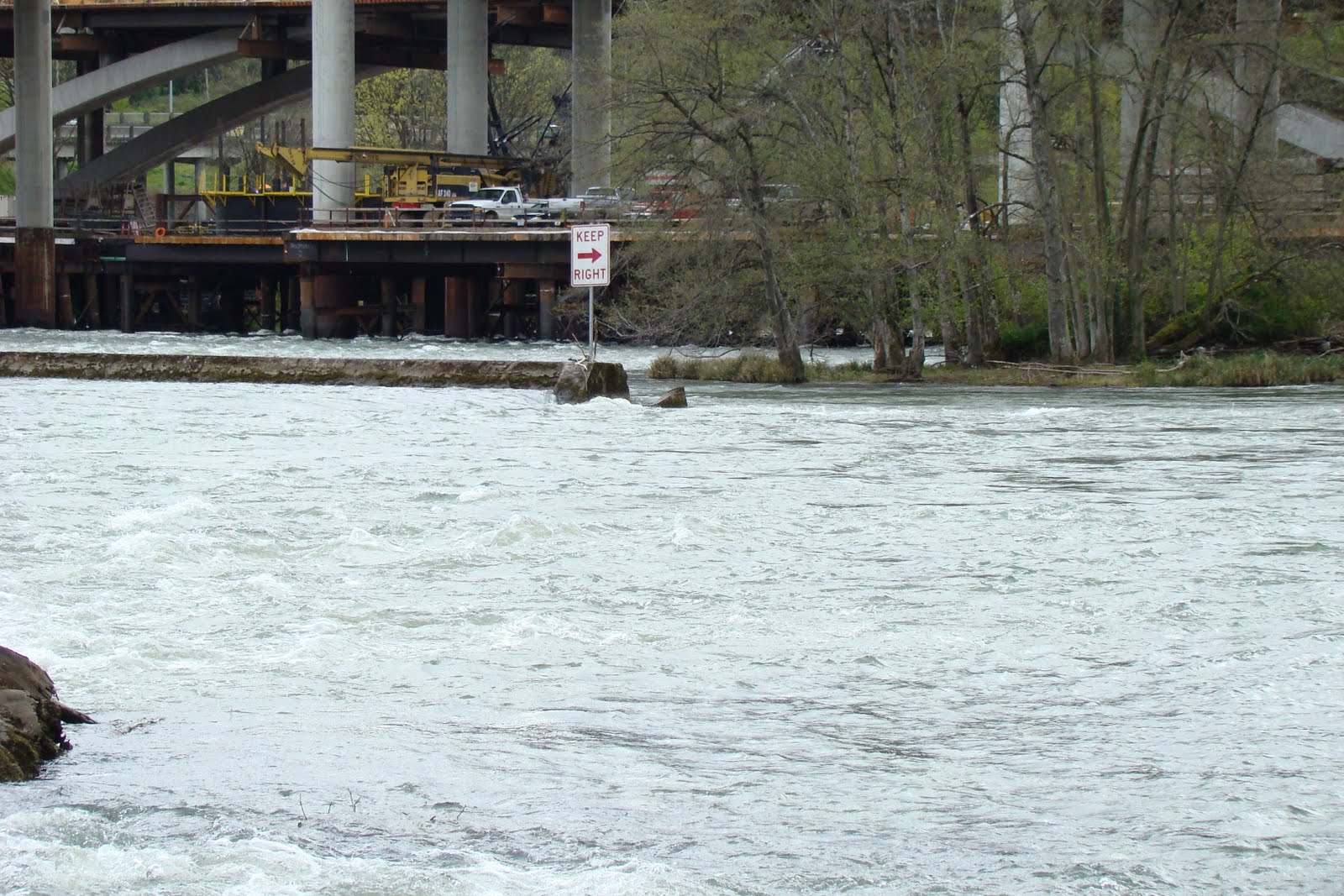
If you enter the river east of the bridge and float under the bridge, signs in the river direct you to the correct channel and where to cross under the work bridge. Keeping to the right bank, or the north side of the river, is important to pass under the work bridge at the designated safe place. It might seem like you could pass under the work bridge in other locations. However, the combination of the current, pilings in the river, and trapped or floating debris in the river create additional hazards.

For many of you, the arrival of spring means the chance to enjoy the river. We have marked a safe passage under the work bridge. Please use it and stay safe.


Signs point river users to the correct channel to safely pass under the bridge construction.


Selasa, 01 Maret 2011

ODOT Listens to Citizens

From ODOT- As the ODOT Area Manager for Lane County, I see firsthand the benefits of community input on our various capital projects. The Willamette River bridge project is a great example of citizens working with ODOT to achieve results that meet the required standards, while reflecting local community values.

The Citizen Advisory Group (CAG), made up of representatives of nearby neighborhoods, local jurisdictions, local organizations, and citizens at large has worked on the project since the early planning stages in 2007.

The CAG provides a key link between the community and the project. Its members give feedback on issues ranging from bridge engineering, placement and appearance of sound walls, design enhancements and landscaping to the park paths and open spaces surrounding the project. They also assist in reaching out to stakeholder groups through open houses and public forums.

The frequent dialogue between CAG members, ODOT and other key stakeholders is thoughtful and thorough; seeking concensus before moving forward. These volunteers contribute many hours to listen, learn and provide input. Their participation is invaluable and leads to a better community outcome.

The success of the Willamette River Bridge project reflects the partnership between the CAG and ODOT. Everyone is focused on creating a lasting community asset.

Thanks to all our local citizen stakeholders for their past and ongoing participation.

Rabu, 16 Februari 2011

From ODOT - Avoiding impacts to basic services:

Construction of the Willamette River Bridge involves ODOT, Hamilton Construction Company and subcontractors, yet many other entities are affected.

The project site includes many utility services that our construction crews must be aware of: power lines, fiber optics communication lines, water lines, natural gas pipelines, local network copper and fiber optic cables, sewer lines, and overhead electric lines.

Before construction begins, we carefully plan how to minimize potential service disruptions to local customers by ensuring that utility lines are relocated or carefully protected.

On the Willamette River Bridge project, we’ve worked with the Eugene Water and Electric Board (EWEB), Springfield Utility Board, Williams Gas Pipeline, Qwest, Comcast, the City of Eugene, and the Metropolitan Wastewater Management Commission. We’ve collaborated with them to identify potential conflicts between current service locations and construction of the project.

Throughout the project, once the conflicts are identified, we work with the utility companies to find a solution to relocate services. While most conflicts have been resolved at this point, coordination will continue through construction.

We appreciate the cooperation of the service providers, which has helped us keep our project on schedule.